
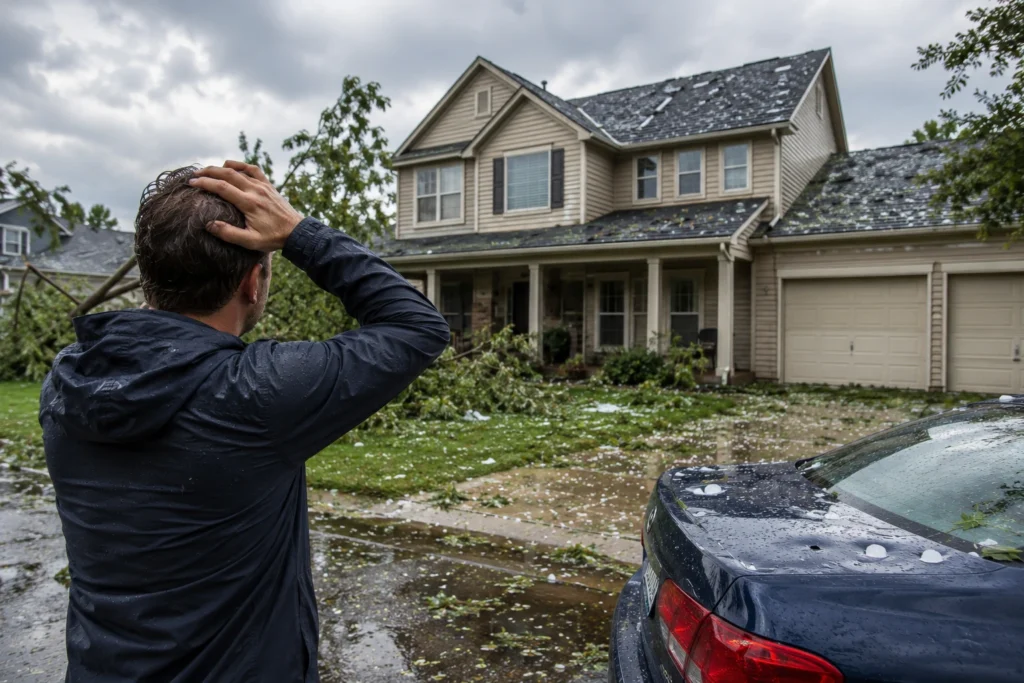
Hailstorms create chaos fast. One afternoon your roof looks perfectly fine. A few minutes later, shingles are bruised, gutters are dented, windows are cracked, and water may already be finding its way into the attic. The frustrating part? Many homeowners do not realize that the success of a claim often depends less on the storm itself and more on how well the damage gets documented afterward. That is why understanding How to Document Hail Damage for an Insurance Claim matters so much.
Strong documentation can support a smoother settlement. Weak documentation can lead to delays, disputes, partial payments, or outright denials. Insurance companies rely heavily on evidence. The clearer and more organized your evidence is, the stronger your position becomes during the claim process. For homeowners across Texas, especially in hail-prone areas like Killeen, storm preparation is no longer optional. It is part of protecting your property investment.
Many homeowners begin researching topics like Hail Damage Roof Insurance Claim: How to Protect Your Roof immediately after severe storms because the first few days after impact often determine how strong the insurance claim documentation becomes later. Fast action, organized evidence, and careful roof inspections can significantly improve the chances of identifying both visible and hidden storm damage early. This guide breaks down exactly how to document hail damage step by step. No fluff. No vague advice. Just practical actions homeowners can take immediately after a storm to build a stronger insurance file from day one.
Why Documentation Matters More Than Most Homeowners Realize
Insurance claims are evidence-driven. Not emotion-driven. Not opinion-driven. Evidence matters. Documentation matters. Timelines matter. A homeowner may know their roof was damaged during a storm, but insurance carriers still need proof connecting the storm event to the actual property damage. That proof often comes from photographs, written notes, weather reports, contractor inspections, receipts, and organized communication records. This becomes especially important with hail damage because some roofing problems are subtle at first.
A roof may look “mostly fine” from the ground while still suffering from:
- Granule loss
- Shingle bruising
- Compromised seal strips
- Metal flashing damage
- Hidden moisture intrusion
Those hidden problems can shorten roof life significantly. According to the Texas Department of Insurance, homeowners should document all visible damage immediately after storms and keep detailed records throughout the claims process. The sooner documentation starts, the stronger the claim foundation becomes.
Safety Comes First Before Inspecting Damage
This part matters more than most people think. After a severe hailstorm, homeowners often rush outside immediately. I understand the instinct. You want to check the roof. You want answers fast. But storm-damaged properties can become dangerous quickly. Avoid climbing onto the roof immediately after the storm. Wet shingles, loose flashing, unstable decking, and fallen power lines create real hazards. If there are signs of structural instability, stay back entirely until professionals inspect the property. Instead, begin documentation safely from ground level.
Use:
- Smartphone zoom photography
- Binoculars
- Ground-level wide shots
- Ladder-edge photography only if conditions are safe
Watch for:
| Safety Hazard | Why It Matters |
| Wet roofing surfaces | Slipping risk |
| Fallen electrical lines | Electrocution risk |
| Broken tree limbs | Sudden collapse danger |
| Cracked skylights | Hidden fall hazards |
| Water intrusion near outlets | Electrical fire risks |
Temporary emergency mitigation is fine if safe to perform. Tarping exposed roof sections or moving valuables away from leaks can help reduce additional losses. Just avoid putting yourself in danger trying to gather evidence.
Start With Wide-Angle Photos of the Entire Property
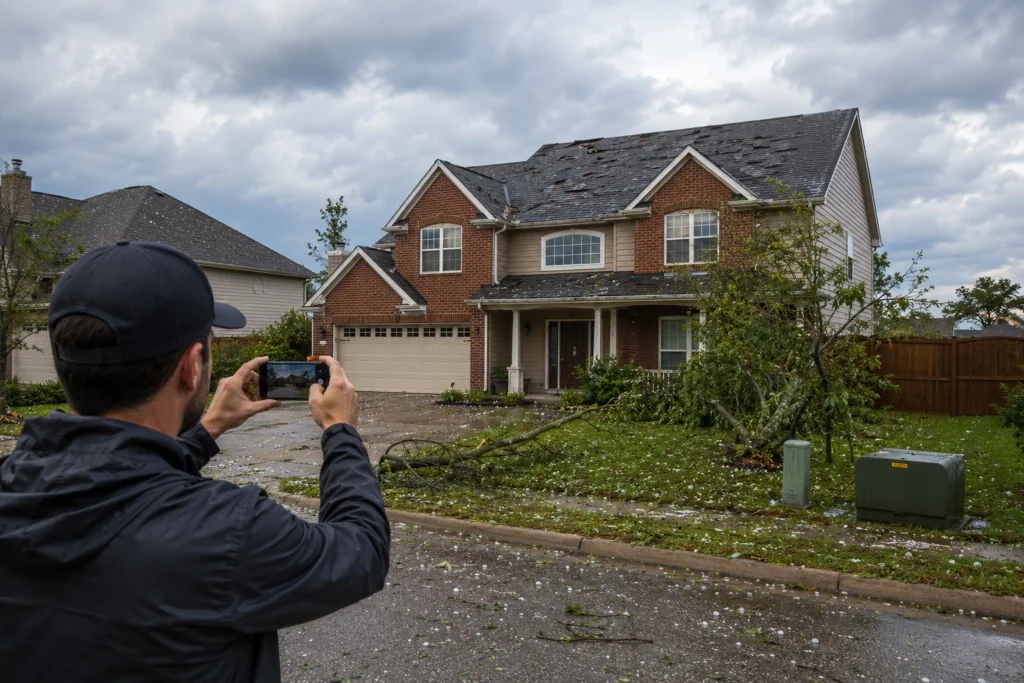
One of the biggest mistakes homeowners make is focusing only on close-up damage. Insurance documentation should begin with the full property first. Think like a timeline builder. You want to show the condition of the entire structure after the storm event before zooming into individual damage areas.
Start by photographing:
- Front elevation
- Rear elevation
- Both side elevations
- Roofline angles
- Detached structures
- Garage
- Fence lines
- HVAC units
- Windows
- Gutters
- Downspouts
Then document surrounding storm evidence.
This includes:
- Fallen branches
- Hail accumulation
- Damaged siding
- Broken patio furniture
- Neighboring roof damage
- Vehicle dents
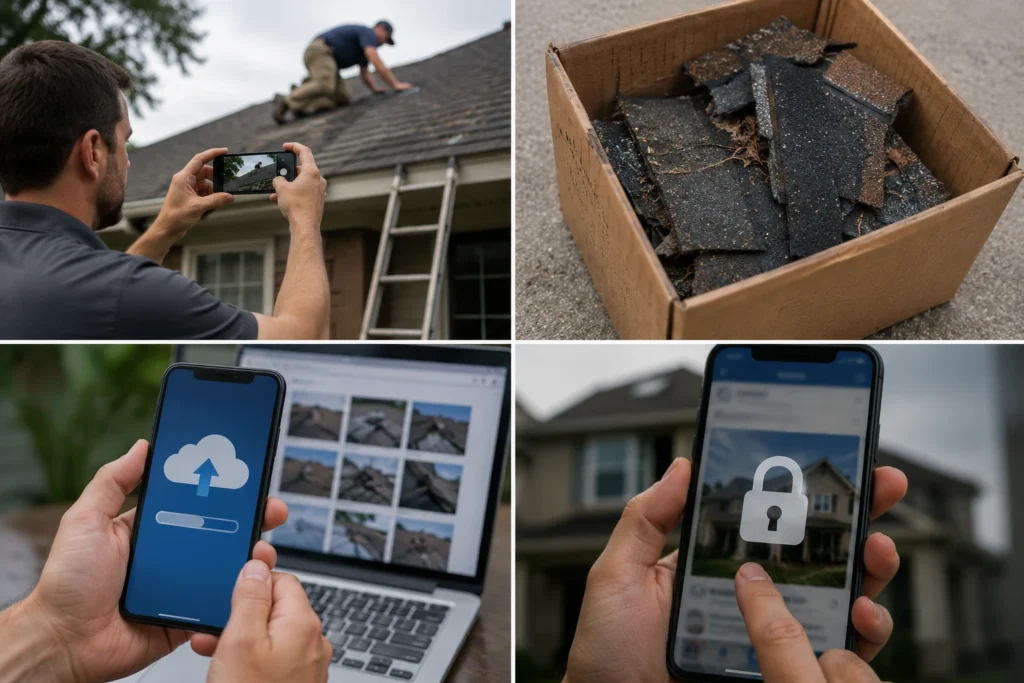
These supporting visuals help establish storm severity. Take multiple angles. More is better. And yes, timestamps matter. Most smartphones automatically embed metadata into photographs. Keep those settings enabled. Upload images to cloud storage immediately to avoid accidental loss later.
A smart organization system looks like this:
- Folder 1: Exterior Damage
- Folder 2: Roof Damage
- Folder 3: Interior Damage
- Folder 4: Receipts
- Folder 5: Insurance Correspondence
- Folder 6: Contractor Reports
Simple organization now prevents major headaches later.
How to Photograph Roof Hail Damage Properly
Roof documentation becomes the heart of most hail claims. This is where many disputes begin. And unfortunately, this is where many homeowners unknowingly weaken their own claim. Understanding How to Document Hail Damage for an Insurance Claim means learning how insurers actually evaluate roofing evidence.
Focus on the Most Vulnerable Areas
Certain roof sections suffer more damage during hailstorms.
Pay close attention to:
- Ridge caps
- Roof valleys
- Soft metal vents
- Flashing
- Gutters
- Downspouts
- Skylights
- Chimney caps
- Shingle slopes facing prevailing winds
Soft metals often provide the clearest impact evidence because dents remain visible even when shingle damage is harder to identify.
What Hail Damage Looks Like
Not all hail damage appears dramatic. Sometimes the signs are subtle. Common indicators include:
| Type of Damage | What It Looks Like |
| Granule loss | Dark exposed asphalt spots |
| Circular bruising | Soft impact areas |
| Cracked shingles | Fractures across shingle surface |
| Metal dents | Circular impact marks |
| Exposed fiberglass mat | Missing protective layers |
| Broken seal strips | Lifted or loosened shingles |
Lighting angle matters enormously during photography. Early morning or late afternoon sunlight often reveals impacts more clearly because shadows highlight surface texture changes.
Take:
- Wide roof shots
- Mid-range area photos
- Tight close-up damage images
Include reference objects when possible. A coin, ruler, or chalk circle can help demonstrate hail size and damage location clearly.
Drone Photography Can Strengthen Roof Claims
Drone technology has changed storm documentation dramatically. Aerial photography allows homeowners and contractors to safely capture roof conditions without immediately walking damaged surfaces.
Drone images help show:
- Entire slope conditions
- Patterned hail impacts
- Missing shingles
- Vent damage
- Ridge damage
- Tree strike locations
For steep roofs, multi-story homes, or fragile roofing systems, drone evidence can become extremely valuable. This is especially true during large regional storms affecting communities like Killeen, where adjusters may handle dozens of inspections daily. Detailed drone photography can help prevent important damage areas from being overlooked.
Do Not Ignore Interior Damage
Some homeowners only focus on the roof itself. Big mistake. Interior evidence often becomes critical during hail claims because it helps prove moisture intrusion and functional damage. Document every interior symptom immediately.
This includes:
- Ceiling stains
- Bubbling drywall
- Wet insulation
- Peeling paint
- Warped flooring
- Mold growth
- Damp attic areas
- Electrical issues
- Dripping vents
Take photos before cleanup begins whenever possible. Then continue documenting progression over time. Water damage evolves. A small ceiling stain can spread significantly over several days. Create a timeline.
For example:
| Date | Observation |
| May 3 | Small ceiling stain appeared |
| May 5 | Stain doubled in size |
| May 8 | Paint bubbling developed |
| May 10 | Visible drywall sagging |
This progression helps establish cause and severity.
Create a Detailed Written Damage Log
Photos alone are not enough. Strong claims combine visuals with written records. A simple damage log should include:
- Storm date
- Approximate storm time
- Hail size estimates
- Wind conditions
- Visible property damage
- Areas inspected
- Interior leak locations
- Contractor visit dates
- Insurance communication notes
The more organized the recordkeeping becomes, the easier the claim process usually feels later. I strongly recommend using both digital and physical backups.
Keep:
- Printed copies
- Cloud backups
- USB copies
- Email archives
Organization creates credibility. And credibility matters during claim negotiations. Strong documentation systems often rely on careful organization and layered evidence collection, almost like building a small digital archive using principles similar to taxonomy structures where information is grouped logically for easier retrieval later during the claims process.
Keep Communication Records From Day One
This section gets overlooked constantly. Every conversation matters. Every email matters. Every inspection note matters.
Document all communication with:
- Insurance carriers
- Contractors
- Roofing companies
- Adjusters
- Mitigation crews
- Engineers
Track:
| Communication Type | What to Save |
| Phone calls | Dates, names, summaries |
| Emails | Full threads |
| Text messages | Screenshots |
| Estimates | PDFs and revisions |
| Inspection reports | Full copies |
| Claim numbers | Centralized log |
If disagreements happen later, detailed communication records can become extremely valuable.
Save Every Storm-Related Receipt
Even small receipts matter. Seriously. Temporary repair expenses often qualify for reimbursement under many homeowner policies.
Keep receipts for:
- Tarps
- Emergency roof repairs
- Boarding materials
- Hotel stays
- Dehumidifiers
- Fans
- Water extraction
- Temporary relocation expenses
The Texas Department of Insurance storm recovery guide specifically recommends retaining all receipts tied to storm mitigation and emergency repairs. Do not throw away damaged materials too early either. If shingles, vents, or flashing sections are removed, ask contractors whether samples should be preserved temporarily for claim documentation.
Weather Reports Can Support Your Claim
Weather data adds another layer of evidence. And it can become extremely useful during disputed claims.
Strong supporting sources include:
- NOAA storm reports
- Local radar history
- Hail size databases
- Weather station records
- Local news coverage
These reports help establish:
- Storm timing
- Hail size
- Wind intensity
- Storm path
That information helps connect the property damage directly to a documented weather event. For homeowners researching How to Document Hail Damage for an Insurance Claim, this step often gets skipped entirely. It should not. Weather evidence can reinforce causation arguments significantly.
Common Documentation Mistakes That Hurt Claims
This is where many homeowners unintentionally weaken their case. Let’s break down the biggest mistakes.
Waiting Too Long
Time matters. Delays can create questions about when damage occurred. Document immediately.
Taking Too Few Photos
Take more than you think you need. Then take more. Storage is cheap. Missing evidence is expensive.
Relying Only on Contractor Photos
Always maintain your own records too. Independent documentation matters.
Throwing Away Damaged Materials
Do not discard roofing materials too early if they may support inspections later.
Failing to Back Up Evidence
Phones get damaged. Files get deleted. Use cloud storage immediately.
Posting Claim Details on Social Media
This surprises people. But public posts about repairs, vacations, property conditions, or damage discussions can sometimes complicate claims. Keep claim discussions private whenever possible.
How Insurance Adjusters Evaluate Hail Damage
Understanding the inspection process helps homeowners document more effectively.
Insurance adjusters typically inspect:
- Roof slopes
- Soft metals
- Gutters
- Siding
- Windows
- HVAC units
- Interior leaks
- Attic spaces
They also evaluate:
- Storm consistency
- Age-related wear
- Maintenance condition
- Prior damage indicators
This is why organized evidence matters so much. If homeowners understand How to Document Hail Damage for an Insurance Claim, they can often provide clearer support for storm-related losses versus long-term wear issues.
Understanding Supplemental Claims
The first insurance estimate is not always final. Not even close. Additional damage often appears after repairs begin.
Contractors may uncover:
- Rotten decking
- Hidden moisture
- Flashing failures
- Ventilation problems
- Code compliance issues
That leads to supplemental claims. And supplements rely heavily on documentation.
The strongest supplemental negotiations usually include:
- Updated photos
- Contractor explanations
- Material invoices
- Code references
- Moisture readings
- Repair progression records
Well-organized homeowners often handle supplements more effectively because they already built detailed evidence files from the beginning.
Public Adjusters vs Insurance Adjusters
This part causes confusion for many homeowners. Insurance adjusters work for the insurance carrier. Public adjusters work for policyholders. That difference matters.
Public adjusters often assist with:
- Documentation review
- Scope analysis
- Estimate disputes
- Supplemental negotiations
- Claim organization
- Policy interpretation
Some homeowners manage claims successfully alone. Others prefer professional assistance during larger or more complex losses. Situations where homeowners may consider outside help include:
| Situation | Why It Matters |
| Claim denial | Requires evidence review |
| Large roof replacement | Higher financial stakes |
| Underpaid estimate | Scope disputes |
| Multiple structures damaged | Increased complexity |
| Interior water damage | Additional categories involved |
Homeowners in Killeen frequently research the claims process before hiring contractors or adjusters because hail claims can become financially significant very quickly. That research-first approach is smart.
Questions to Ask Before Hiring Anyone
Whether hiring a contractor or public adjuster, ask direct questions.
Important topics include:
- Are you licensed in Texas?
- How do you document storm damage?
- Do you provide photo reports?
- Have you handled hail claims locally?
- How do supplements work?
- Will I receive copies of all documentation?
- Do you use drone inspections?
- What happens if hidden damage appears later?
Good professionals welcome informed homeowners. Transparent communication matters.
Build a Claim File Like a Professional
One of the best things homeowners can do is think like investigators. Build a complete claim file.
Include:
- Photos
- Videos
- Receipts
- Weather reports
- Inspection reports
- Communication logs
- Claim numbers
- Contractor estimates
- Supplemental documents
The stronger the organization becomes, the stronger the negotiating position usually becomes too. This does not guarantee claim approval. But it absolutely improves clarity, credibility, and evidence quality.
How Contractors and Roofing Reports Influence Hail Claims
One important detail many homeowners overlook is how much influence contractor documentation can have during the insurance process. Not all inspections are equal. Some roofing inspections are quick visual walkarounds that last ten minutes. Others are detailed evaluations involving test squares, attic inspections, moisture readings, drone imaging, and written scope reports. The quality of the inspection often affects the quality of the claim documentation.
A strong roofing inspection report may include:
- Marked roof diagrams
- Slope-by-slope damage counts
- Ventilation assessments
- Flashing condition notes
- Soft metal impact analysis
- Interior moisture observations
- Photo references tied to exact roof locations
This level of detail can help clarify disputes later if the insurance carrier questions the extent of storm-related damage. Homeowners researching How to Document Hail Damage for an Insurance Claim should understand that contractor documentation works best when paired with homeowner-generated evidence. Do not rely entirely on a third party to preserve the claim history for you. Maintain your own records too.
That includes:
| Documentation Type | Why It Helps |
| Independent homeowner photos | Establishes early timeline evidence |
| Contractor inspection reports | Adds professional observations |
| Drone imaging | Provides overhead roof perspective |
| Moisture readings | Supports hidden leak claims |
| Repair estimates | Helps establish repair scope |
| Material samples | Demonstrates physical impact evidence |
Another important point: ask contractors for copies of everything.
You should always receive:
- Inspection photos
- Written findings
- Repair estimates
- Scope summaries
- Material recommendations
- Supplement requests submitted to insurance
Transparency matters. If a contractor hesitates to provide documentation copies, that can create problems later when claim questions arise.
Why Roof Age and Maintenance History Matter
Insurance carriers often examine roof age closely during hail claims. This does not automatically mean older roofs cannot qualify for coverage. They absolutely can. But adjusters frequently evaluate whether visible issues stem from storm impacts or long-term wear and tear. That is why maintenance records become valuable supporting evidence.
Helpful records include:
- Prior roof inspections
- Maintenance invoices
- Previous repair receipts
- Roof replacement documentation
- Warranty paperwork
- Before-storm property photos
Even simple smartphone photos taken months earlier can become surprisingly useful if they show the roof condition before the hail event.
For example:
- A pre-storm photo showing intact shingles
- Followed by post-storm bruising evidence
- Combined with weather reports
- Supported by contractor findings
That creates a stronger timeline narrative. Without documentation, disagreements become much harder to resolve. This issue becomes especially important in Texas hail regions where multiple storms may affect the same property over several years. Insurance carriers sometimes investigate whether damage came from a recent storm or an older weather event. Detailed records help clarify that timeline.
How to Document Gutters, Siding, and Exterior Components
Roof damage gets most of the attention. But exterior accessories matter too. Hail impacts often leave clear evidence on softer surfaces throughout the property. In some cases, those secondary impact areas help support the entire roofing claim because they confirm storm severity and impact direction.
Document damage to:
- Gutters
- Downspouts
- Garage doors
- Window screens
- AC condenser fins
- Mailboxes
- Patio covers
- Fencing
- Siding
- Exterior light fixtures
Take both close-up and wide-angle images. For dents, side-angle lighting often works best because shadows make impacts easier to see. One particularly important area is HVAC equipment. Air conditioning condenser fins can show hail strikes clearly, especially after larger storms. Since these systems are expensive, documenting visible impacts early can become financially important later.
Some homeowners in Killeen also discover fencing and detached structure damage after major storms. Sheds, pergolas, detached garages, and patio covers should all be included in the inspection process. The more complete the property documentation becomes, the more accurately the full loss picture can be evaluated.
Why Consistency Matters During the Entire Claims Process
Consistency builds trust. If the documentation stays organized, factual, and chronological from beginning to end, the claim process usually becomes smoother.
That means:
- Use consistent file naming
- Keep dates accurate
- Avoid exaggeration
- Save all revisions
- Document updates as repairs progress
For example, a good photo naming system might look like this:
- FrontRoofSlope_May12
- GarageCeilingLeak_May13
- GutterDent_WestSide_May12
- AtticMoisture_May14
Small organizational habits make a major difference later. Especially if the claim extends for weeks or months. Large hail claims often involve multiple inspections, supplemental requests, contractor revisions, and ongoing communication. Without organized records, homeowners can quickly lose track of critical details. Understanding How to Document Hail Damage for an Insurance Claim is not only about collecting evidence once. It is about maintaining organized evidence throughout the entire process from first inspection to final repair completion.
Why Organized Documentation Changes Claim Outcomes
I cannot emphasize this enough. The strongest claims are rarely the loudest claims. They are the best documented claims.
Insurance disputes often come down to one question:
Can the damage be clearly supported with evidence? That is why learning How to Document Hail Damage for an Insurance Claim before major problems arise can save enormous stress later.
Homeowners who stay organized tend to:
- Respond faster
- Track repairs more accurately
- Support supplements better
- Reduce confusion
- Strengthen negotiations
- Avoid missing deadlines
And perhaps most importantly, they feel more in control during a stressful process.
Final Thoughts
Hailstorms create more than roof damage. They create uncertainty. Financial pressure. Repair stress. Insurance confusion. Scheduling headaches. Long email chains. Delayed inspections. It becomes overwhelming fast. But documentation creates structure during that chaos. Knowing How to Document Hail Damage for an Insurance Claim allows homeowners to protect themselves with evidence instead of relying on memory later. Clear photos, organized records, weather reports, receipts, communication logs, and detailed timelines all contribute to a stronger claim foundation.
The process does not need to be perfect. It just needs to be organized. Take more photos than you think you need. Keep records carefully. Back everything up. Document changes over time. Save receipts. Ask questions. Stay proactive. Because when hail damage disputes happen, strong evidence often becomes the difference between frustration and resolution.
FAQs
You should begin documenting damage as soon as conditions are safe. Early evidence helps strengthen the insurance timeline.
Photos help significantly, but combining them with inspection reports, receipts, and weather records creates a stronger claim file.
Some hail damage is hidden and only visible during a professional roof inspection or drone evaluation.
You can do either first, but many homeowners prefer getting an inspection first to better understand the possible damage.
Many policies cover reasonable emergency mitigation costs if they help prevent further damage.
Timestamps help establish when the damage was discovered and support the storm timeline during claim reviews.
Yes. Interior leaks and moisture damage can help show that hail damage affected the roofing system.
You may request a claim review, submit additional documentation, or pursue supplemental negotiations.
Drone inspections can safely capture roof damage photos and provide better visibility on steep or large roofs.
Yes, if possible. Preserved materials may help support inspections or supplemental claim discussions later.